There’s always that one spot on the driveway. Dark, greasy, right where you park. Maybe your car has a slow leak. Maybe you changed your own oil once and spilled some. Doesn’t matter now, you’ve got an ugly stain that won’t go away, no matter how much you scrub it.
Oil and concrete are a terrible combination. Concrete looks solid, but it’s actually full of tiny holes. Oil seeps right down into those pores and just sits there. You can spray it with a hose until the water bill makes you cry and it won’t budge.
USA Power Washing Plus sees this all the time in Ocean County, NJ.
Power Washing Stain Removal NJ
Driveways with one stain, driveways with twenty. Some come out clean, some don’t. Here’s the truth about what works and what’s just wasting your time.
Why Oil Stains Are Such a Pain
Concrete’s porous. That’s the whole problem. When oil drips on it, the oil doesn’t just sit on top as water would. It soaks down into all those microscopic holes in the concrete.
Fresh stains are manageable if you catch them fast. But most people don’t notice until the stain’s been there for weeks. By then, the oil’s deep in the concrete and good luck getting it out with regular cleaning.
Oil also bonds to concrete in a way that dirt doesn’t. Dirt you can sweep or rinse off. Oil sticks. It’s not just sitting there, it’s chemically attached to the concrete surface.
What Doesn’t Actually Work
Everyone tries dish soap first. Makes sense, it cuts grease on dishes, right? Doesn’t work on concrete. Dish soap works on plates because they’re smooth and non-porous. Concrete’s neither. You’ll just make a soapy mess.
Your garden hose isn’t doing anything either. Even on the highest setting, it doesn’t have the pressure to pull oil out of concrete. You’re basically giving your driveway a bath that accomplishes nothing.
Home Depot sells a bunch of driveway cleaner products. Some are okay for light surface dirt. For oil stains, they’re mostly useless. The ones that actually work are full of harsh chemicals that aren’t great for your lawn or whatever’s downstream from your driveway.
Cat litter works if the oil just spilled and you throw it on immediately. It’ll soak up the oil on the surface. But if the stain’s been there for days or weeks, the oil’s already soaked in. Cat litter can’t pull it back out.
Why Power Washing Actually Gets Results
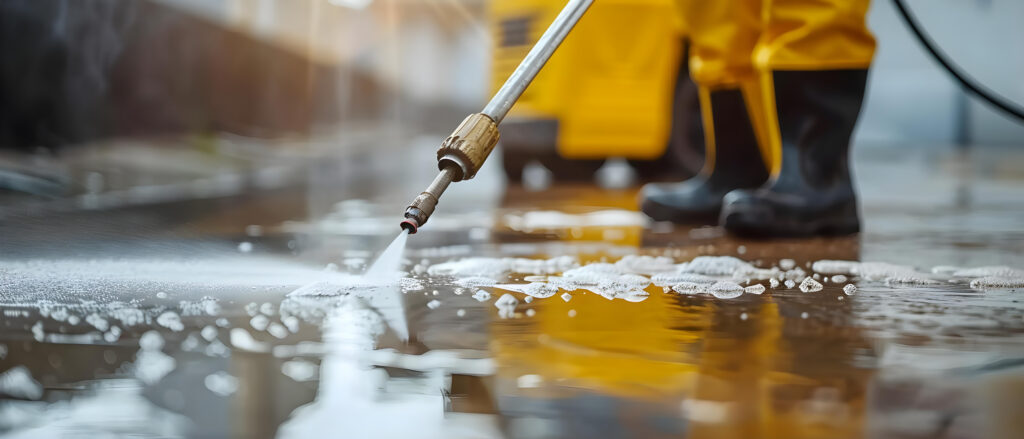
Power washing uses high pressure water, 3000 PSI or more for concrete, to force the oil out of those pores. The water pressure gets deep into the concrete, breaks up the oil, and flushes it out.
It’s not instant. Bad stains take multiple passes and some elbow grease. But it’s the only method that actually removes the oil instead of just making it look slightly better for a week.
USA Power Washing Plus does driveways all over Ocean County, NJ. Fresh stains come out completely most of the time. Old stains that have been sitting for months or years, those fade considerably, but sometimes leave a faint shadow. Better than the dark ugly blotch, though.
Hot water makes a difference. Hot water cuts through oil better than cold. Think about washing a greasy pan. Cold water just pushes the grease around, hot water actually removes it. Same thing with concrete.
How to Power Wash Oil Stains the Right Way
You can’t just point a power washer at the stain and pull the trigger. There’s a technique involved.
Start With a Degreaser
Before you even turn on the power washer, put degreaser on the stain. Concrete specific degreaser works best. Let it sit for 10 to 15 minutes, but don’t let it completely dry out.
Some people use Simple Green or Purple Power from the hardware store. They’re okay. Not as good as commercial concrete degreaser, but cheaper.
Get the Nozzle and Pressure Right
Wrong nozzle and you either waste your time or ruin your concrete. Too wide and there’s no concentrated pressure to pull the oil out. Too narrow and you’ll etch lines into the concrete.
For oil on concrete, use a 15 or 25-degree nozzle. Keep it 6 to 12 inches from the surface. Closer for really stubborn spots, farther if the concrete’s old or already damaged.
Work Systematically
Don’t just spray randomly. Work in sections. Overlap your passes so you don’t get streaks. Keep the wand moving. If you hold it in one spot, you’ll carve a groove in your driveway.
Bad stains need multiple passes. First pass loosens things up. Second pass pulls more out. Sometimes you need a third.
Check Your Work After It Dries
Let everything dry completely before you decide if it worked. Wet concrete looks different than dry. Some stains that look gone when wet reappear when dry.
If there’s still staining after the first round, hit it with degreaser again and do another pass with the power washer. Old stains might need this twice or even three times.
When You Should Just Hire Someone
Power washers rent for about $100 a day at Home Depot. For a small driveway with one or two stains, renting might make sense. But there’s a learning curve and it’s easy to damage your concrete if you screw up.
Professional equipment is significantly better. More pressure, better water flow, and hot water capability. Those hot water units cost thousands of dollars. You’re not renting one of those.
USA Power Washing Plus handles driveways in Ocean County, NJ, constantly. The equipment’s commercial grade, the results are better, and you don’t blow your Saturday fighting with a machine that’s probably underpowered anyway.
If your whole driveway’s stained, if it’s really old and dirty, or if you just don’t want to deal with it, hiring out makes sense. Costs a few hundred bucks, depending on size, but it gets done properly.
Keeping Your Driveway Clean After
Once you’ve gotten the stains out, don’t let them come back. If your car leaks, put a cardboard or a drip pan under it. Better yet, fix the leak.
Seal your concrete. A good sealer makes it way less porous, so future oil spills sit on top instead of soaking in. You can wipe them up before they stain. Sealer needs reapplication every couple of years, but it’s worth the hassle.
Clean up fresh spills immediately. Oil hits the driveway, throw cat litter on it right away to soak up what you can. Then, actually clean it before it has time to penetrate.
Final Thoughts
Oil stains on concrete aren’t permanent. Well, sometimes they are if they’ve been there for five years, but most are fixable. Not always perfectly, but enough that your driveway doesn’t look like a gas station parking lot anymore.
Power washing’s what actually works. The right equipment, proper technique, and some degreaser. That’s what pulls oil out of concrete instead of just spreading it around.
You can rent equipment and do it yourself if you’re into that. Or call USA Power Washing Plus and let someone who does this regularly handle it. Either way works.
Your driveway’s literally the first thing people see when they pull up to your house. Might as well not have it covered in ugly oil stains.